


A practical overview of how gelatin functions in confectionery, dairy, desserts, meat products, beverages, and nutrition formats, with the specification factors that guide grade selection.
Why Gelatin Remains Important in Food
Edible gelatin combines several useful functions in one animal-derived protein. Depending on the formulation and process, it can form a thermoreversible gel, stabilize foam, build body, bind water, or assist clarification. Manufacturers and procurement teams need to connect the required product performance with an appropriate gelatin specification, then confirm that choice in the intended recipe and process.
The Top 10 Food Applications
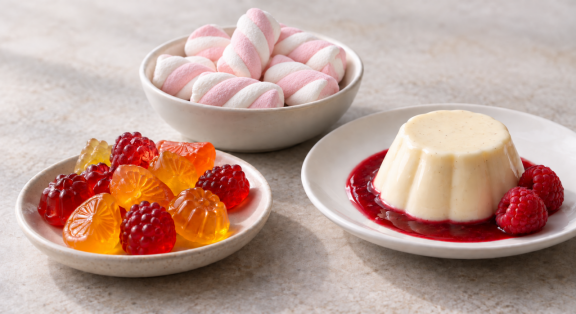
- 1. Gummy and jelly candies - gelatin creates elastic chew, shape retention, and a clear appearance.
- 2. Marshmallows - gelatin supports foam formation and stabilization while helping the finished product develop a light, springy structure.
- 3. Gelled desserts and panna cotta - controlled gelatin concentration produces a tender gel that holds its shape and softens readily in the mouth. The target texture determines the required gel strength and dosage.
- 4. Yogurt and dairy desserts - in suitable formulations, gelatin can improve body, water retention, and resistance to syneresis.
- 5. Mousses and aerated desserts - gelatin helps stabilize air cells and sets the surrounding liquid phase, supporting volume and a clean cut during chilled storage.
- 6. Confectionery fillings and glazes - gelatin can adjust consistency, binding, and cut quality in soft centers, fruit preparations, and decorative glazes.
- 7. Aspics and jellied meat products - gelatin forms a savory gel, binds cooking juices, and supports sliceability and presentation.
- 8. Beverage and wine clarification - selected gelatin products can act as fining agents by interacting with tannins and suspended material.
- 9. Ice cream and frozen desserts - gelatin is used in selected formulations to support body, melting behavior, and control of ice-crystal growth.
- 10. Protein-enriched foods and nutrition products - gelatin can add protein together with binding or gelling functionality in bars, gummies, and gelled foods.
Choosing the Right Grade for Each Application
Grade selection starts with the required function. Gel strength indicates firmness, while a complete specification also covers viscosity, concentration, raw-material source, particle size, color, odor, pH, microbiological limits, and processing conditions. Buyers should define the application and acceptance criteria before comparing products or prices.
Start with the target texture and process window, then qualify a representative sample. A grade that performs well in one recipe may need a different concentration or process in another formulation.
A Practical Grade Selection Matrix
The matrix below links common applications with the performance priorities and specifications that deserve early discussion. Final selection should follow trials in the customer's own formulation and process.
| Application | Functional priority | Parameters to qualify |
|---|---|---|
| Gummies and jellies | Elastic chew, set, clarity | Gel strength, viscosity, concentration, acidity, solids |
| Marshmallows and aerated desserts | Foam stability and spring | Whipping behavior, gel strength, syrup and process |
| Gelled desserts and dairy | Tender gel, body, water retention | Gel strength, dosage, pH, protein interaction, sensory quality |
| Fillings and glazes | Consistency, binding, clean cut | Viscosity, gel strength, solids, process temperature |
| Aspics and jellied meats | Set, water binding, sliceability | Gel strength, viscosity, source, flavor, microbiological limits |
| Beverage and wine fining | Tannin and particle removal | Fining trials, product type, dosage, beverage conditions |
Emerging and Functional Product Directions
Product development is extending gelatin into reduced-sugar confectionery, protein-enriched snacks, portioned nutrition products, and hybrid hydrocolloid systems. Gelatin can rebuild part of the structure in reduced-sugar products, while solids, sweetness, water activity, and shelf life still require coordinated reformulation. Collagen peptides are selected mainly for nutritional fortification, while gelatin supplies the gel structure. Nutrition or front-of-pack claims should be supported by the finished formulation and destination-market rules.
A Buyer's Sourcing Checklist
For each application, confirm the following points with the supplier:
- Map every product to its required function, then specify gel strength, viscosity, source, sensory limits, and other relevant attributes.
- Confirm animal-source documentation and any halal, Kosher, or customer-specific certification needed for the market and label.
- Agree on the specification and test methods, and review the Certificate of Analysis for each supplied lot.
- Test representative samples in the intended recipe and production process before approving commercial supply.
- Qualify backup sources through equivalency trials and maintain lot-level traceability and supplier change notification.
Why the Specification Matters to Buyers
The ten applications above place different demands on the same ingredient. A gummy line may prioritize elastic texture and depositing behavior, while a dairy product may focus on water retention and mouthfeel, and a fining process may require a specialized gelatin selected by trial. Clear specifications help procurement, quality, and production teams manage these differences. The most useful supplier discussion covers the application, agreed test methods, representative samples, batch consistency, documentation, and change control before commercial orders begin.
Frequently Asked Questions
Q: Which food application uses the most gelatin?
A: Gummies and jelly candies are among the most visible high-volume applications, but the leading category varies by region, product mix, and market data. Buyers should estimate demand from their own formulations and annual production plans.
Q: Can one gelatin grade serve several products?
A: Yes, when the products have compatible performance requirements and the grade has been validated in each formulation. Concentration and process settings may still differ by product.
Q: Is gelatin suitable for reduced-sugar products?
A: Gelatin can provide gel structure and mouthfeel in reduced-sugar formulations. Because sugar also affects solids, water activity, and texture, the complete recipe and shelf life should be reassessed.
Q: Do food applications require special certification?
A: Edible gelatin must comply with the applicable food regulations and the customer's approved specification. Halal, Kosher, animal-source, export, and other documents depend on the destination market, product claim, and customer requirements.
Key Takeaways
- Edible gelatin supports gelling, foaming, stabilization, binding, water management, and clarification across diverse food products.
Gel strength is important, while viscosity, concentration, source, sensory quality, process conditions, and compliance also guide selection.
Representative samples should be validated in the intended formulation before the commercial grade is approved.
Agreed specifications, lot CoAs, traceability, and change control support consistent supply across product lines.
References & Further Reading
- EFSA — Food AdditivesEuropean Food Safety Authority. Independent EU safety evaluation of food additives, including gelling agents and stabilisers.
- WHO/FAO JECFA — Food AdditivesJoint FAO/WHO Expert Committee on Food Additives. International safety assessments for food additives in globally traded foods.
- GMIA — Standard Methods for Edible GelatinGelatin Manufacturers Institute of America. Standardised Bloom, viscosity, moisture, and microbial test methods on Certificates of Analysis.
- Halal Gelatin — IFANCAIslamic Food and Nutrition Council of America. Halal-certification guidance for gelatin buyers.

Post time: Sep-29-2026

