


How to protect dry pharmaceutical gelatin through appropriate packaging, controlled storage, incoming inspection, and management of retest or expiry dates.
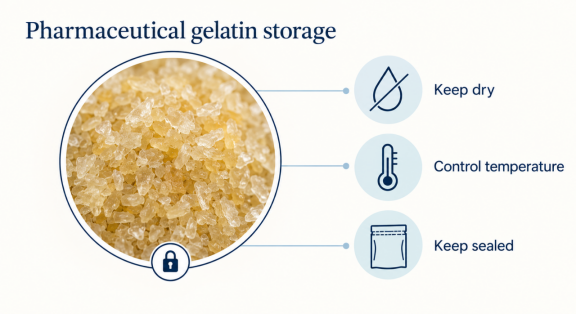
Why Storage Matters for Pharmaceutical Gelatin
Pharmaceutical gelatin should retain its specified quality from receipt through use. For buyers and manufacturers, this means protecting the dry ingredient, maintaining traceable records, and confirming its release status before production. Dry gelatin can remain stable under suitable conditions, while moisture exposure, excessive heat, contamination, or damaged packaging may affect its suitability. Storage controls should therefore reflect the selected grade, packaging, supplier instructions, and intended pharmaceutical application. This guide focuses on dry gelatin powder or granules. Prepared gelatin solutions, empty capsule shells, and finished medicines require storage and holding conditions established for those materials and processes.
Linking Material Quality to Product Performance
Gel strength, viscosity, moisture, and microbiological quality help define gelatin suitability for pharmaceutical use. Changes in these attributes may affect processing or dosage-form performance, depending on the formulation and manufacturing conditions. Finished-product dissolution also depends on shell or tablet composition, the fill or active ingredient, processing, packaging, and storage history. Buyers should connect material acceptance criteria with the intended application and agree how storage excursions will be assessed. This gives quality teams a practical basis for deciding whether an affected lot remains suitable.
Moisture and Heat Exposure During Storage
Moisture control is central to storing dry gelatin. Moisture uptake can promote caking and alter handling; microbial growth becomes a concern when sufficient available water and suitable conditions are present. Prolonged heat exposure, particularly with high humidity, may affect functional properties. Protective packaging, suitable warehouse conditions, and careful opening practices work together to manage these risks. Keep stock away from direct sunlight and local heat sources, following any additional protection requirements for the grade.
- Relative humidity: establish site limits from the supplier recommendations, packaging protection, and local moisture risk.
- Temperature: maintain the specified range and assess both the severity and duration of any excursion.
- Exposure: avoid direct sunlight and heat sources; apply additional light protection where specified.
- Seal integrity: protect the original liner and close opened containers promptly using the approved method.
- Segregation: control contact with odors, chemicals, dust, and incompatible materials through suitable storage arrangements.
Recommended Storage Controls
Translate the supplier storage instructions and approved specification into warehouse limits, monitoring arrangements, and an excursion procedure. Select monitoring locations and frequency using warehouse qualification and risk assessment. Keep records that allow affected lots to be identified when conditions deviate. The following table summarizes the controls to define for each material and packaging system.
| Parameter | Control to define | Purpose |
|---|---|---|
| Temperature | Grade-specific limits and excursion response | Manage heat exposure and temperature changes. |
| Relative humidity | Limits based on material and packaging needs | Limit moisture uptake during storage and handling. |
| Packaging | Approved liner, closure, and resealing method | Maintain protection and traceability after opening. |
| Sunlight and heat sources | Protected location; extra light control if specified | Reduce avoidable environmental exposure. |
| Segregation and status | Suitable separation and controlled stock status | Prevent contamination, mix-ups, and unintended use. |
Packaging That Protects Material Quality
Packaging should provide suitable moisture protection and withstand the expected handling and transport route. Confirm the approved liner, closure, and outer packaging before ordering, then inspect their condition on receipt. Any desiccant or additional transport protection should be agreed with the supplier and controlled to prevent contamination. For partly used containers, define how to reseal, identify, and store the remainder, including any justified period for use after opening.
The original packaging is part of the storage system. Intact seals, suitable handling, and documented environmental controls help maintain conformity throughout the assigned storage period.
Incoming Inspection and Quarantine
Place incoming gelatin under quarantine status until the required checks, sampling, and testing are complete and the quality unit authorizes use. Review the Certificate of Analysis (CoA) alongside the approved specification and supplier qualification status. The testing plan should satisfy applicable GMP requirements, including identity testing and any justified reliance on supplier results.
- Maintain clear quarantine and release status, with controls that prevent unintended use.
- Inspect seals, liners, labels, and outer packaging for damage, moisture, contamination, or pest evidence.
- Match the grade, lot number, CoA, and assigned retest or expiry date with the order and approved records.
- Record receipt and storage location; link available transport and warehouse condition records to the lot.
- Rotate released stock by the earliest applicable expiry or retest date, with status checks before issue.
Retest Dates and Expiry Dates
A pharmaceutical gelatin grade may carry a retest or re-evaluation date, or an expiry date, according to the manufacturer's stability approach. A retest date triggers reassessment before further use. Any additional period of use requires an approved procedure, suitable testing, review of storage history, and quality-unit authorization supported by appropriate evidence. An expiry date is the assigned end of use; routine retesting should not be treated as automatic permission to extend it. Confirm the meaning of the stated date before purchase and record the basis for every subsequent disposition decision.
Managing Temperature Changes and Condensation
Follow the grade-specific temperature instructions during transport and storage. When sealed containers arrive colder than the receiving room, allow the material to equilibrate in a controlled area before opening. Opening while the material is below the room's dew point can expose it to condensation from humid air. Define a suitable equilibration procedure for the load and packaging, and check for moisture or damage before sampling. Similar precautions apply when stock moves between substantially different environments.
Common Storage and Handling Gaps
- Using storage areas without adequate environmental control, segregation, or material-status identification.
- Opening cold containers before assessing condensation risk and allowing appropriate equilibration.
- Reviewing temperature alone while overlooking moisture exposure and packaging condition.
- Issuing stock after its assigned date without the required assessment and quality authorization.
- Returning damaged or suspect containers to available stock before investigation and disposition.
Frequently Asked Questions
Q: Does pharmaceutical gelatin have an expiry or a retest date?
A: Either may apply. Confirm the manufacturer's documentation; retest dating requires reassessment and approval before further use, while expiry dating defines the assigned end of use.
Q: What humidity is suitable for storage?
A: Use the limits established for the grade, packaging, and warehouse. Supplier recommendations and risk assessment should guide moisture control and monitoring, including during sampling and dispensing.
Q: Why quarantine gelatin on arrival?
A: Quarantine prevents use while packaging, documentation, and required test results are reviewed. The quality unit releases the lot once the applicable acceptance requirements are met.
Q: Can a caked bag be used after drying?
A: Hold it for investigation. Caking may indicate moisture exposure or physical compaction. Quality staff should assess the cause, packaging, and relevant test results before disposition; unapproved drying does not establish suitability.
Key Takeaways
- Base pharmaceutical gelatin storage on the specific grade, approved packaging, and documented quality requirements.
- Control moisture and heat exposure, maintain seal integrity, and define handling after opening.
- Link quarantine, incoming testing, CoA review, and stock rotation to the assigned dating system.
- Prevent condensation and route damaged packaging or storage excursions through documented quality assessment.
References & Further Reading
- IPEC GMP Guide for Pharmaceutical ExcipientsInternational Pharmaceutical Excipients Council. GMP and quality standards governing excipient manufacturers that supply medicines.
- ICH Q1A(R2) — Stability Testing of New Drug Substances and ProductsInternational Council for Harmonisation. Recommended storage conditions and stability-study designs (temperature, humidity, duration) by climatic zone.
- USP–NF Reference StandardsU.S. Pharmacopeia. Compendial monograph and documentary standards for gelatin identity, strength, quality, and purity.
- GMIA — Standard Methods for Edible GelatinStandardised Bloom, viscosity, moisture, and microbial test methods that support incoming specification checks and retest decisions.

Post time: Sep-29-2026

